


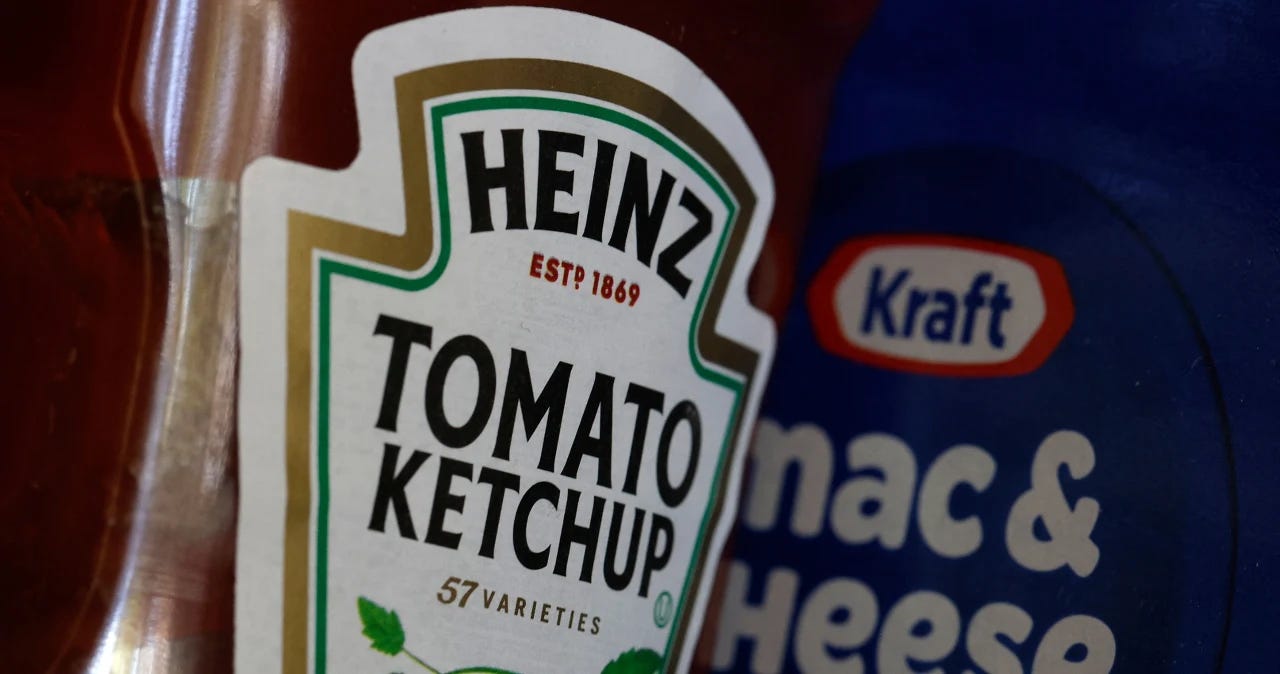
On December 16, 2025, The Kraft Heinz Company issued a corporate directive that fundamentally alters the trajectory of one of the world’s largest food and beverage conglomerates. The announcement that Steve Cahillane, fresh from executing the $36 billion sale of Kellanova to Mars, Incorporated, would assume the role of Chief Executive Officer on January 1, 2026, marks a decisive pivot in the company’s corporate strategy.1 This leadership transition, occurring amidst a pre-announced separation into two independent publicly traded entities, signals a profound shift in board sentiment regarding the company’s future value creation capability and the fate of its legacy portfolio.
The sudden and unexpected removal of current CEO Carlos Abrams-Rivera, who was previously designated in September 2025 to lead the post-split “North American Grocery Co.,” suggests an aggressive recalibration of the company’s separation strategy.1 While the official narrative frames the separation as an operational necessity to “unlock the potential” of distinct portfolios, the appointment of a CEO renowned for executing one of the sector’s most significant exits has ignited widespread market speculation regarding an ultimate sale or breakup of the underlying assets.4
This analysis provides an exhaustive study of the events of December 16, 2025, dissecting the strategic rationale, investor sentiment, and market rumours surrounding the leadership overhaul. It explores the divergence between the “Global Taste Elevation Co.” and “North American Grocery Co.,” evaluates the operational headwinds necessitating this change—specifically the failure of the previous “Let’s Make Life Delicious” transformation plan—and posits that the arrival of Steve Cahillane is the strongest indicator yet that Kraft Heinz is preparing for a definitive transactional exit from the public markets for one or both of its future entities. The analysis suggests that the Board, heavily influenced by the legacy of 3G Capital and Berkshire Hathaway, has abandoned the organic turnaround thesis in favour of a structural monetisation event.
Anatomy of a Leadership Shock
The Announcement Mechanics
On Tuesday, December 16, 2025, Kraft Heinz announced a sweeping leadership reorganisation that surprised market observers and internal stakeholders alike.1 The directive was not merely a succession plan but a complete restructuring of the executive hierarchy ahead of the company’s planned bifurcation. The core components of the announcement are as follows:
CEO Appointment: Steve Cahillane, former Chairman, President, and CEO of Kellanova, is appointed CEO of Kraft Heinz effective January 1, 2026.1 This appointment places an executive with a specific reputation for corporate separation and subsequent sale at the helm of a company attempting a similar manoeuvre.
Post-Separation Role: Following the planned separation of the company (expected in the second half of 2026), Cahillane will not manage the conglomerate but will instead serve as CEO of “Global Taste Elevation Co.,” the growth-oriented entity housing premium brands such as Heinz, Philadelphia, and Kraft Mac & Cheese.1
Executive Departure and Strategic Reversal: Carlos Abrams-Rivera, the sitting CEO who took the helm in 2024, will step down on January 1, 2026. He will transition to an advisory role until March 6, 2026, to facilitate the handover.1 Most critically, the announcement rescinded his future appointment as CEO of “North American Grocery Co.,” a role publicly confirmed in September 2025.4
Strategic Void in Grocery: The Board has initiated a global search for a CEO to lead “North American Grocery Co.,” an entity comprising legacy brands such as Oscar Mayer and Lunchables.1 This explicitly reverses the previous plan for Abrams-Rivera to lead this unit, creating a leadership vacuum in the company’s most cash-generative but operationally challenged division.
Board Governance Restructuring: John T. Cahill, currently Vice Chair, will succeed Miguel Patricio as Board Chair.1 This marks the end of Patricio’s direct oversight of the “transformation” phase and reinstates John Cahill, a veteran of the original Kraft Foods Group, to a primary governance role during the separation.
The Timing and Strategic Context
The timing of this announcement is critical to understanding its strategic weight. It occurred just days after the final regulatory approval and closure of the Mars-Kellanova transaction.5 This suggests that the Kraft Heinz Board, led by Miguel Patricio and representatives of 3G Capital and Berkshire Hathaway, likely courted Cahillane specifically during the window of his exit from Kellanova. The synchronisation implies a high degree of urgency to secure a leader with a specific “deal-making” pedigree rather than just a traditional operator.4
Furthermore, the announcement comes three months after the company’s initial September 2025 announcement of its intent to split.11 The interim period between September and December has been characterised by deteriorating financial performance, including a cut to full-year guidance in October 2025 and continued volume declines in North American retail.12 The Board’s decision to replace the architect of the current operational plan with an external “change agent” reflects a total loss of confidence in the organic turnaround narrative and a pivot toward financial engineering.
The decision to install Cahillane immediately, rather than waiting until the separation concludes in late 2026, indicates that the Board requires his specific expertise in structuring the separation to maximise tax efficiencies and transactional optionality.13 It also suggests that the “North American Grocery Co.” required a different leadership profile (likely one focused on radical cost restructuring or preparation for a private equity sale) than Abrams-Rivera, a marketer by trade, could provide.
